Tree Deadwooding in Allentown & Bethlehem, PA
Dead limbs do not just look bad. They drop without warning and let decay spread through the tree. We clear them out to keep your tree healthy and your yard safe.
What Deadwooding Is
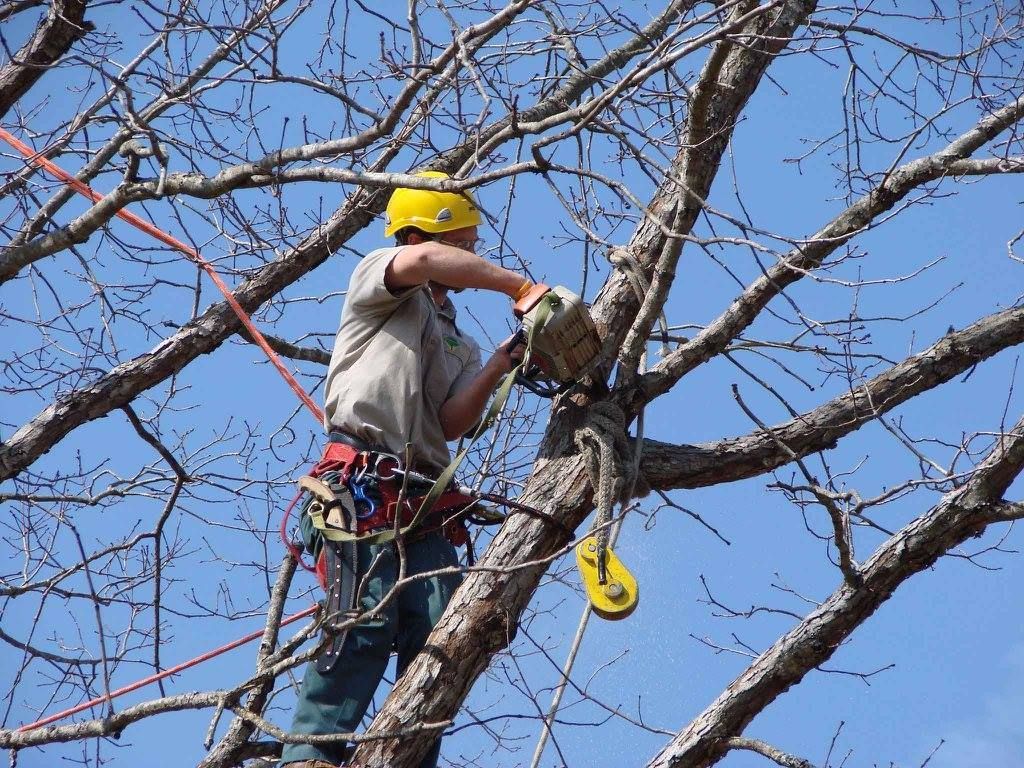
Deadwooding is exactly what it sounds like: carefully removing the dead, dying, and diseased branches from a tree while leaving the healthy growth alone. It is one of the simplest things you can do to make a mature tree safer and help it live longer.
Every tree sheds branches as it grows. The problem is when those dead limbs stay up in the canopy over your house, your driveway, or your yard, waiting for the next storm or gust to bring them down.
Why It Matters
- Safety. Dead limbs are brittle and fall without warning, often onto a roof, car, or walkway.
- Tree health. Removing dead and diseased wood stops decay and pests from spreading into the healthy parts of the tree.
- Appearance. A tree cleared of deadwood looks full and cared for instead of ragged.
Signs Your Tree Needs Deadwooding
Take a look up into the canopy. It is probably time if you see:
- Bare branches with no leaves while the rest of the tree is full
- Large dead limbs hanging over the house, driveway, or where people walk
- Brittle, cracking, or peeling branches
- Fungus or mushrooms growing on the limbs, a sign of internal decay
How We Do It
We make clean cuts at the right spot so the tree can seal the wound and heal, and we never strip out healthy growth just to make the job bigger. When we are done, we clear the debris and haul it away. This is part of our full tree trimming service. Call 484-695-4222 for a free estimate.
Reviewed and updated July 2026.
Why Deadwood Forms in the First Place
Some of it is completely normal. A tree grows toward light, and the lower and interior branches that end up permanently shaded stop earning their keep. The tree shuts them down and lets them die. That is a healthy tree managing itself, and the only issue is that the dead branch stays up there until something knocks it loose.
The rest of it is worth paying attention to. Deadwood that shows up at the top of the tree, or all on one side, or suddenly across a tree that was fine last year, is usually telling you something: root damage from construction or trenching, soil compacted by equipment or vehicles, drought stress from a dry summer, storm damage, or disease. In those cases removing the dead wood is the right first step, but the more useful thing is understanding why it happened, and we will talk that through with you while we are there.
Trees Around the Lehigh Valley That Need It Most
Working in Allentown, Bethlehem, and the surrounding townships, the same few situations come up over and over.
Ash
Emerald ash borer has moved through this part of Pennsylvania and ash trees have taken the worst of it. A dying ash is genuinely different from other deadwood work: the wood goes brittle fast, limbs come apart with very little warning, and the tree becomes dangerous to climb. If you have an ash that is thinning at the top, do not put that one off, and do not let anyone climb it who has not looked at it closely first.
Oak
Big mature oaks in older neighborhoods carry a lot of interior deadwood simply because of their size and age. The limbs are heavy, and a dead oak limb coming out of a tall canopy has real weight behind it.
Silver maple
Fast growing, common in yards all over the valley, and weak wooded. Silver maples shed limbs readily, and regular deadwooding is the difference between choosing when a branch comes down and finding out during a storm.
Storm damaged trees
After a bad wind, the visible damage is the broken limb on the lawn. The part worth checking is what got cracked and left hanging up in the canopy, which will die over the following season and come down later.
What Deadwooding Does Not Include
Deadwooding is a specific job: dead, dying, broken, and hanging material comes out, and living wood stays. It is not topping, it is not thinning a canopy for light, and it is not clearing branches off your roof. If what you actually need is the branches pulled back off the house or the driveway, that is clearance trimming. If one large limb is the whole problem, that is hazardous limb removal. Often a tree needs two of the three, and we will price them together on the same visit rather than making it two trips.
When Deadwooding Is No Longer the Answer
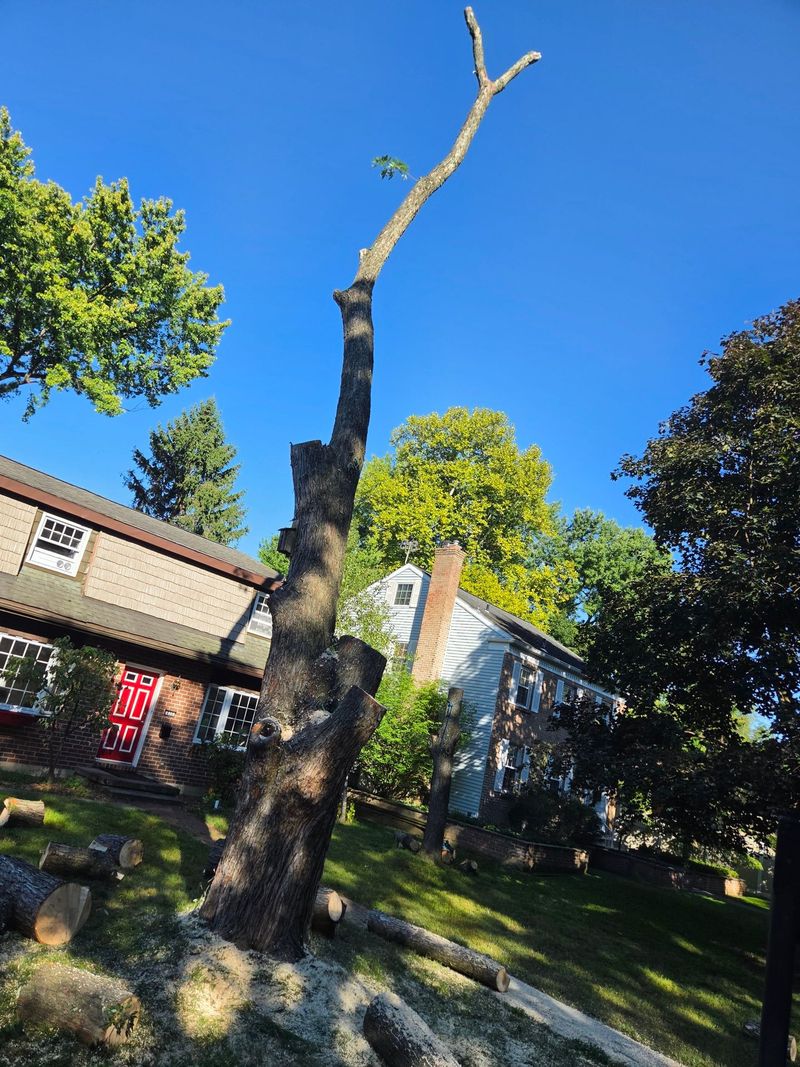
Sometimes the dead wood is the whole tree. This one was past saving, so it came down in sections rather than getting pruned.
Deadwooding Questions
What is deadwooding?
It is the careful removal of dead, dying, and diseased branches from a tree while leaving the healthy growth in place. It makes the tree safer and helps it stay healthy.
Does deadwooding hurt the tree?
No, the opposite. Done right, with clean cuts at the branch collar, it helps the tree by removing decayed wood before it spreads. We never over-cut or strip healthy limbs.
How do I know if my tree needs it?
Look up into the canopy for bare branches with no leaves, brittle or cracked limbs, or large deadwood hanging over your house or walkway. If you are not sure, we will take a look for free.
How often should it be done?
It depends on the tree and its age, but many mature trees benefit from a check every few years. We can tell you what your specific trees need when we come out.
Are you licensed and insured?
Yes. We are fully insured and hold Pennsylvania Home Improvement Contractor License #098771, so your property is covered on every job.